
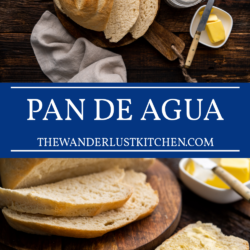
This Pan de Agua recipe, the ‘water bread’, is a staple in Latin American kitchens. Revel in its fluffy texture and satisfying density – an effortlessly simple bread that promises to be the easiest loaf you’ll ever bake!
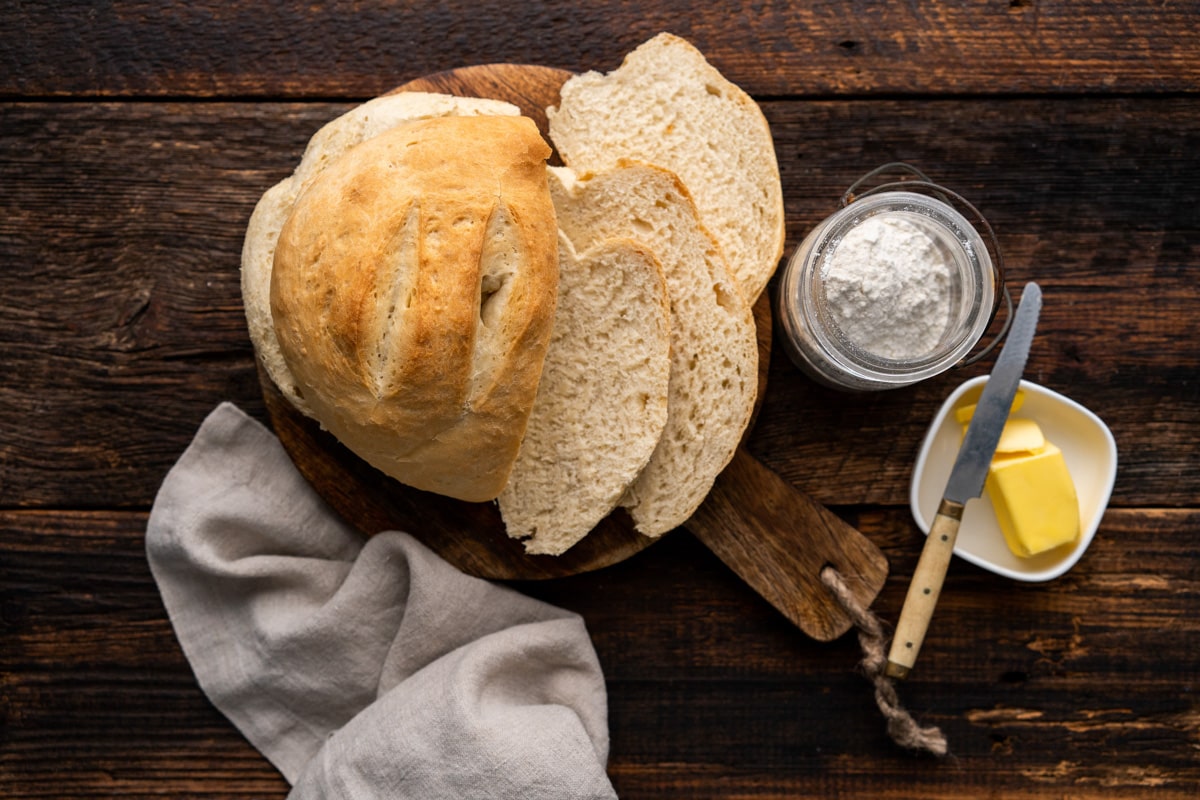
Table of Contents
What is Pan De Agua?
Pan de agua, which translates to “water bread” in Spanish, is a traditional Puerto Rican bread with a unique texture and flavor. It is characterized by its thin, crisp, and golden crust that encases a soft and airy interior. The name “water bread” originates from its simple ingredients, which primarily include flour, water, yeast, and a touch of salt. This bread is a staple in Puerto Rican cuisine.
There is something cathartic about baking bread. If you want some of my other favorite bread recipes then you have to try my Easy Rustic Olive Bread, Savory Irish Soda Bread, and Honey and Herb Bread.
Why We Love This Recipe
- Pan de Agua has that crisp outer layer that gives a satisfying crunch, balancing the soft interior.
- Just flour, yeast, water, and salt – it’s back to basics with ingredients you likely have at home.
- No fancy techniques needed, making it a joy for bakers of all levels to create.
- It’s the ultimate comfort food, conjuring up the warmth of a family kitchen.
Recipe Ingredients

- All-Purpose Flour: This provides the structure and body of the bread.
- Active Dry Yeast: This is the leavening agent that helps the bread puff up and get that lovely, airy interior.
- Salt: It’s crucial for flavor and also helps control yeast fermentation for the perfect rise.
See the recipe card for full information on ingredients and quantities.
Variations
- Herb Pan de Agua: Mix in Italian seasoning and garlic powder for an aromatic herb-infused loaf.
- Cheesy Pan de Agua: Incorporate shredded cheddar cheese and a hint of cayenne pepper for a spicy cheese bread.
- Sweet Cinnamon Pan de Agua: Add sugar and cinnamon to the mix for a sweet, breakfast-style bread.
- Olive Oil & Rosemary Pan de Agua: Blend in olive oil and fresh rosemary for a fragrant, Mediterranean touch.
How to Make Pan de Agua
Step #1: In a large bowl, dissolve the yeast in hot water and let it sit for 25 minutes, stirring occasionally.

Step #2: Next, add the flour and salt to the yeast mixture.

Step #3: Then, knead the dough for 10 minutes until it reaches an elastic consistency.

Step #4: Cover the bowl with a kitchen towel and let the dough rise for 1 hour and 45 minutes. Then, punch it down and let it rise for another 45 minutes.

Step #5: While it is rising the second time, preheat your oven to 450 degrees Fahrenheit (232 degrees Celsius).
Step #6: After it has risen, shape your dough into a loaf, cut slits in the middle, and bake on a baking sheet for 20 minutes, or until golden brown.

Finally, serve with butter and enjoy!

Expert Tips
- Egg Wash Shine: For an extra glossy finish, brush the dough with an egg white wash before baking; this will lend the crust a stunning, shiny golden appearance.
- Water Temperature: Ensure warm water is between 105-110°F (40-43°C) for optimal yeast activation; water that’s too hot can kill the yeast, while water that’s too cold won’t activate it.
- Cornmeal Dusted Baking Sheet: If you have cornmeal in your pantry dust the baking sheet with it before placing the dough on it. This will help it keep from sticking to the sheet. If you don’t have cornmeal, then just use some extra flour.
- Sharp Cuts: Use a very sharp knife or razor to cut slits into the dough; this helps in even expansion and prevents tearing.

Frequently Asked Questions
No, it can easily be made by hand or with a standard mixer with dough hooks.
Absolutely, it toasts well and becomes extra crispy, perfect for spreads or toppings.
It should have a golden-brown crust and sound hollow when tapped on the bottom.
It’s often served as a side for meals, used for sandwiches, or enjoyed with coffee.
Pan de Agua has a thinner crust and a softer crumb compared to the chewier texture of a French baguette.
Storage Info
To keep Pan de Agua fresh, store it at room temperature, wrapped in a cloth inside a plastic bag for two days. For extended storage, freeze the sliced bread wrapped in plastic and then in foil for up to three months. To warm up a whole loaf of bread or slices, heat them in an oven preheated to 350°F (about 175°C); it should take roughly 10-15 minutes.
More Delicious Recipes That You Will Love
Pan de Agua Recipe
Ingredients
- 4 1/2 cups all-purpose flour
- 1 1/2 cups water
- 1 Tbsp active dry yeast
- 1 tsp salt
Instructions
- In a large bowl, dissolve the yeast in hot water and let it sit for 25 minutes, stirring occasionally.
- Next, add the flour and salt to the yeast mixture.
- Then, knead the dough for 10 minutes until it reaches an elastic consistency.
- Cover the bowl with a kitchen towel and let the dough rise for 1 hour and 45 minutes. Then, punch it down and let it rise for another 45 minutes.
- While it is rising the second time, preheat your oven to 450 degrees Fahrenheit (232 degrees Celsius).
- After it has risen, shape your dough into a loaf, cut slits in the middle, and bake on a baking sheet for 20 minutes, or until golden brown. Finally, serve with butter and enjoy!
VIDEO
NOTES
Nutrition





Thank you so much for sharing! This recipe turned out great!!!
Hello, I tried this recipe, and I did exactly what the recipes said and very sadly is hard. Taste good and everything but is like a rock…Im from Puerto Rico and I know how is supposed to taste but every time I do it they stay hard. Can you please help me? I don’t know what Im doing wrong.
Hi Nicole, yes, the bread should not be hard on the inside. Here are some possible reasons and adjustments you can try:
Water Temperature: The hot water should be hot, but not too hot (around 100–110°F / 37–43°C). If the water is too hot, it can kill the yeast, preventing the dough from rising properly, which can result in a dense, hard bread.
Kneading Time: Kneading the dough for too long or too little can affect the bread’s texture. Kneading develops the gluten, but over-kneading can make the dough tough, while under-kneading won’t allow enough gluten formation, leading to dense bread. Aim for 8–10 minutes until the dough is smooth and elastic.
Yeast Activity: Check the yeast’s expiration date. If the yeast is not active enough (due to age), the dough won’t rise sufficiently, resulting in hard bread.
Resting Time: The dough should rise adequately both times. If your environment is too cool, the dough may not rise well. Make sure you’re letting it rise in a warm place. If it doesn’t double in size after the rising times listed, give it more time.
Humidity and Flour: If the air is dry or you’re in a dry climate, the dough may need a bit more water. Gradually add water if the dough feels too dry. Flour can also vary in absorbency depending on the brand and humidity, so you might need to adjust slightly.
Baking Time and Temperature: Double-check your oven temperature. Baking at too high a temperature or for too long can cause the bread to dry out. Consider using a thermometer to verify the oven’s accuracy or bake for a slightly shorter time if the crust is forming too quickly.
Try these adjustments to see if they help improve the softness and texture of your Pan de Agua!
Thank you. I will try again and I let you know. Can I use a stand mixer? Any suggestions on brands for the ingredients? Like flour – yeast?
Yes, you can absolutely use a stand mixer to make Pan de Agua, which can make the kneading process easier and more consistent. Here’s how to adjust the process if using a stand mixer:
Using a Stand Mixer:
Mixing: After dissolving the yeast in warm water, add the flour and salt to the bowl of the stand mixer.
Kneading: Use the dough hook attachment. Start the mixer on low speed (Speed 2 if using a KitchenAid) for about 8–10 minutes, or until the dough is smooth and elastic. You may need to scrape down the sides of the bowl occasionally to make sure all the ingredients are fully incorporated.
Tip: Be careful not to over-knead with a stand mixer, as it can overwork the gluten and lead to a tough texture. Keep an eye on the dough’s elasticity.
Ingredients:
Flour:
King Arthur All-Purpose Flour: This brand is known for its consistent protein content, which helps produce good gluten development and leads to a great texture in bread.
Gold Medal All-Purpose Flour: Another reliable and commonly available brand with a slightly lower protein content but good for Pan de Agua.
If you prefer organic, Bob’s Red Mill Organic All-Purpose Flour is a solid option.
Yeast:
Red Star Active Dry Yeast: A trusted brand for home baking, Red Star yeast is reliable and widely available.
Fleischmann’s Active Dry Yeast: This is another popular brand known for its performance in various bread recipes.
By using a stand mixer and selecting high-quality ingredients, you should find it easier to get consistent results with your Pan de Agua!
Hello 👋🏻
Just letting you know I did again and took my time to do it and it worked perfectly thank you so much and have a wonderful evening 💜
Nicole, I’m so happy to hear this news! Way to go!!!
Hi Linda,
Love your site followed it for years w your predecessor, something seems goofy w the quantities of this recipe. It blew out my breadmaker (I always use it in dough setting and then rise and bake in oven, a thing of beauty!) bent the blade, so I threw it all out and started over (figured I must have measured wrong, how can you go wrong w 3 ingredients? you can!) so, no go, too loose, bent blade useless, umm don’t know… Anyway, of course if you have access to sponsors wanting to donate breadmaker- I’m a candidate -my husband has stage 3 cancer, we both have Covid (you can’t make this ** up!) so actually, my $3.99 no name flour (8 cups) really does make a difference in my life (2 tablespoons yeast) $149.00 beadmaker all in lovely Canadian dollars.
Yours, sorry, and readers the recipes are great, otherwise have loved and used tons of your recipes, this was a real deal breaker
Mia
Hi Mia, I’m so sorry to hear this news and what you and your husband are going through. You and your husband are in our thoughts and prayers and how you both get over the Covid soon.